
Introduction
Sales teams today are expected to move faster, respond instantly, and scale without increasing overhead. By 2026, many companies have solved this challenge by adopting a virtual sales assistant as part of their core sales strategy.
A virtual sales assistant helps businesses manage essential sales activities remotely, ensuring leads are handled efficiently and sales pipelines remain active at all times. From small startups to global enterprises, companies now rely on virtual sales assistants to support growth while keeping costs under control.
This guide explains the role of a virtual sales assistant, how it works, the value it delivers, and how businesses can use it effectively in 2026.
What Is a Virtual Sales Assistant?
A virtual sales assistant is a remote sales support resource that assists with day-to-day sales operations. This role can be filled by a trained human professional, an AI-driven system, or a combination of both.
Instead of focusing on closing deals, a virtual sales assistant manages the tasks that keep the sales process running smoothly. These tasks include lead preparation, communication follow-ups, scheduling, and CRM maintenance.
By removing repetitive work from sales representatives, virtual sales assistants help teams focus on high-impact activities such as negotiations and relationship building.
Virtual Sales Assistant Models Used in 2026
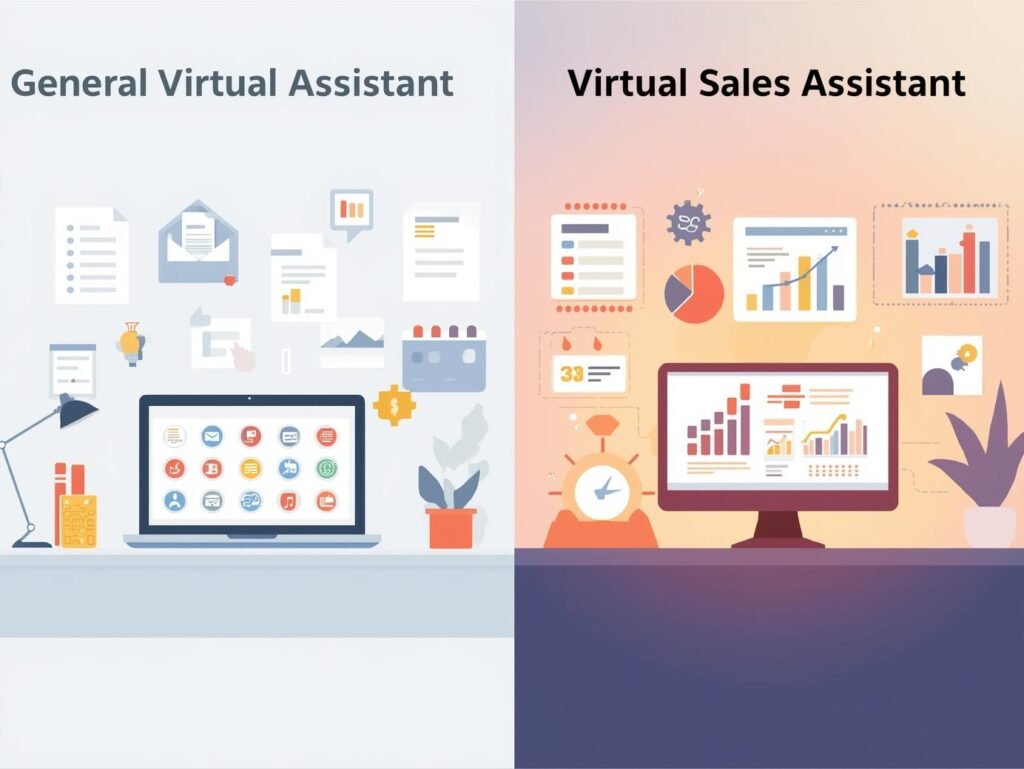
Human-Based Virtual Sales Assistant
A human virtual sales assistant works remotely and supports sales teams through personalized and manual tasks. This model is ideal for businesses that require tailored communication and relationship-driven selling.
Typical responsibilities include:
- Researching potential customers
- Qualifying inbound and outbound leads
- Sending customized emails or LinkedIn messages
- Managing CRM records
- Scheduling calls and demos
AI-Driven Virtual Sales Assistant
An AI-powered virtual sales assistant uses automation to handle repetitive and high-volume sales tasks. These systems operate continuously and respond instantly to customer actions.
Common AI responsibilities include:
- Automated follow-up sequences
- Lead scoring and segmentation
- Website chat engagement
- Sales data analysis and reporting
AI assistants are especially useful for early-stage lead engagement.
Hybrid Virtual Sales Assistant Approach
The hybrid approach combines AI efficiency with human oversight. AI manages speed and scale, while humans handle personalization and decision-making.
In 2026, many businesses consider this the most balanced virtual sales assistant setup.
Key Tasks Handled by a Virtual Sales Assistant
A virtual sales assistant can support multiple stages of the sales funnel, including:
- Lead list building and data enrichment
- CRM data management and updates
- Outreach campaign execution
- Appointment booking and calendar coordination
- Follow-up emails and reminders
- Sales activity tracking
- Client onboarding assistance
These tasks help ensure that no opportunity is overlooked.
Benefits of Using a Virtual Sales Assistant
Cost Control
Hiring a virtual sales assistant is significantly more affordable than maintaining a full in-house sales support team.
Improved Sales Focus
Sales professionals spend more time closing deals instead of managing administrative work.
Flexible Growth
A virtual sales assistant allows businesses to scale sales efforts without long-term hiring commitments.
Faster Lead Response
Timely follow-ups increase conversion rates, and virtual sales assistants help ensure quick engagement.
Global Talent Access
Businesses can work with skilled professionals across different regions and time zones.
Tools Commonly Used by Virtual Sales Assistants
In 2026, a virtual sales assistant typically works with the following tools:
CRM Software
- HubSpot
- Salesforce
- Zoho CRM
Outreach & Automation Platforms
- Apollo
- Instantly
- Lemlist
Scheduling Tools
- Calendly
- Chili Piper
AI & Reporting Tools
- ChatGPT
- HubSpot AI
- Salesforce Einstein
Proper tool integration is essential for smooth sales operations.
Cost of a Virtual Sales Assistant in 2026
Pricing depends on the assistant type:
Human Virtual Sales Assistant
- Offshore: $6–$15 per hour
- Onshore: $20–$40 per hour
AI Virtual Sales Assistant Tools
- $50–$500 per month
Hybrid Virtual Sales Assistant Model
- $500–$3,000 per month
These options are more cost-effective than traditional hiring.
Industries Using Virtual Sales Assistants
A virtual sales assistant is commonly used in:
- Software and SaaS companies
- Real estate businesses
- Travel and tourism agencies
- E-commerce stores
- Healthcare service providers
- Digital marketing agencies
Any business with structured sales workflows can benefit.
How to Hire the Right Virtual Sales Assistant
When selecting a virtual sales assistant, businesses should:
- Define tasks and performance goals clearly
- Look for relevant industry experience
- Evaluate communication skills
- Test CRM and automation knowledge
- Ensure data protection practices
Clear onboarding improves productivity and results.
Managing a Virtual Sales Assistant Successfully
To maximize performance:
- Set clear KPIs
- Use documented SOPs
- Review performance regularly
- Maintain open communication
- Optimize workflows based on data
Strong management turns a virtual sales assistant into a long-term growth asset.
Future Outlook for Virtual Sales Assistants
As AI technology advances, the virtual sales assistant role will continue to evolve. Future capabilities include:
- Predictive lead behavior analysis
- Personalized outreach at scale
- Real-time sales insights
- Deeper CRM automation
Businesses that adapt early will gain a strong competitive advantage.
Conclusion
In 2026, the virtual sales assistant is a critical component of modern sales operations. Whether human, AI-based, or hybrid, virtual sales assistants help businesses reduce costs, increase efficiency, and maintain consistent sales activity.
Companies that integrate virtual sales assistants into their sales strategy are better positioned for sustainable growth in an increasingly competitive market.